August on the Greek islands is lovely if you enjoy queuing for a sunbed. The rest of us tend to look at late spring and early autumn instead: warm enough to swim, quiet enough to get a table without a reservation, and flights that haven't yet reached peak-summer prices. The catch is that the shoulder season isn't one thing. April and October behave almost nothing alike, and the gap between the first week of June and the last is wider than most people expect. Here's what each month actually delivers.
April: green, quiet and partly shut
April is the month when the islands feel like themselves again rather than like a holiday brochure. Daytime temperatures generally sit somewhere between 16°C and 20°C, the hills are still green, and the wildflowers are at their best. The sea, though, is cold — around 16°C or 17°C — so swimming is a quick dip followed by a towel and a coffee.
Ferries are still largely on their winter pattern. Well-served routes such as Piraeus to Paros or Naxos usually run a sailing or two a day; on smaller islands, connections can drop to two or three a week, and some inter-island links don't operate at all until May. Many hotels and tavernas stay shut until late April, and beach bars remain boarded up.
The big exception is Orthodox Easter, which often falls in April. It is the most important week of the Greek year: midnight services lit by candles, fireworks over the harbour, lamb roasted on spits in the square. Wonderful to witness, and also a time when ferries and rooms fill fast, so book both well ahead. Expect some businesses to close for a day or two around Good Friday and Easter Sunday.
May: the month regular visitors keep quiet about
Air temperatures climb into the low-to-mid twenties, the sea reaches roughly 18–20°C — bracing for the first minute, pleasant after that — and almost everything has opened, including the small family tavernas that stay shut all winter.
Summer ferry schedules usually come into force from late April or early May. That means more departures, faster vessels and far better connections between islands: you can move from Milos to Sifnos to Naxos without losing a day. Bear the meltemi in mind. This northerly Aegean wind is usually gentle in May, but it can still delay smaller boats.
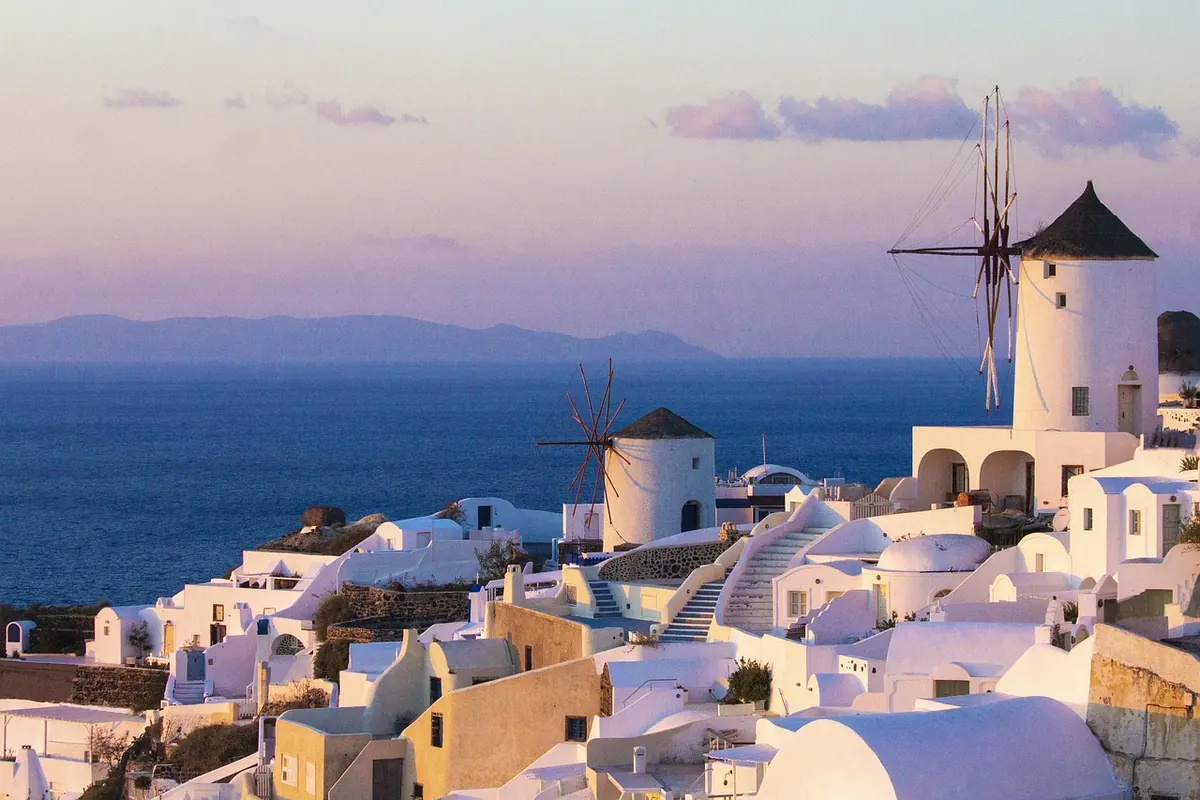
Crowds are mild until the last week or so. Santorini's caldera path and Mykonos's lanes are busy but not yet crushing, and on islands such as Folegandros, Amorgos or Ikaria you may have a beach largely to yourself. Orthodox Easter sometimes falls in May, so check the date for your year and book accordingly.
June: summer proper, but not yet August
June brings air temperatures in the high twenties, often low thirties, and a sea that finally feels warm at around 22–24°C. Water sports, dive centres and boat trips are all running, and most archaeological sites and museums have moved to longer summer opening hours — though many still close on Mondays, and smaller sites may keep reduced hours. Check the day before you travel to a specific site.
Ferries run full summer timetables on most routes, with several daily departures from Piraeus and Rafina and a good spread of conventional ferries and high-speed catamarans. Book ahead for weekend crossings and for routes serving Santorini, Mykonos and Ios, which fill quickly once Greek holidaymakers join in.
Crowds build sharply from mid-June, when European school holidays begin. The caldera villages get genuinely busy; the quieter Cyclades, the Dodecanese beyond Rhodes and most of the Sporades stay manageable. The meltemi strengthens through the month too — welcome on a hot beach, less welcome if you're camping, kayaking or booked on a tight connection.
September: the strongest all-round choice
For many people September is the best month of the year in the islands, and it is hard to argue. The sea is at its warmest, often 24–25°C, the air sits comfortably in the high twenties, and the light softens towards evening. Crowds thin noticeably after the first week or so, once schools return across Europe, and flight and room prices tend to follow them down.
Ferries stay on full summer schedules until around mid-September, then gradually reduce. Tavernas, museums and boat trips are still in full swing, and the grape harvest gives island life a pleasant bustle. Later in the month the meltemi can return, so keep a spare day in any tight island-hopping plan.
October: warm seas, closing shutters
The first half of October can be superb. Air temperatures sit around 22–25°C early in the month and cool gradually, while the sea is often warmer than the air — swimming in mid-October is one of the season's quiet pleasures.
After that, the islands begin to close. Seasonal flights from the UK thin out and some routes finish altogether in late October. Smaller islands may drop to a few sailings a week. Beach bars pack up their sunbeds, tavernas shut one by one, and hotels often close for the winter. The larger islands — Crete, Rhodes, Corfu, Kos — keep going year-round and are the safer bet for a late trip. Rain becomes more likely, and the first autumn storms can be dramatic.
Before you book
Five things worth checking
- Ferry timetables change by date, not by month. Look up the schedule for your exact travel dates rather than assuming a daily service because it's May.
- Confirm your accommodation is actually open. A listing can stay online long after the shutters come down. Send an email or make a quick call.
- Leave a buffer between flight and ferry. An afternoon flight into Athens and an evening sailing is a plan that fails quietly; an overnight on the mainland is a plan that works.
- Pack for two seasons. A light waterproof layer, a warm jumper for evenings and shoes that cope with wet cobbles will earn their place in your bag from April to October.
- Check your travel insurance. Ferry cancellations because of wind happen regularly, and a policy that covers delays, missed connections and an extra night's accommodation is worth reading carefully before you buy.
Treat the calendar as a guide rather than a promise. Island life runs on weather and demand, and a week in May on Naxos can feel quite unlike a week in May on Corfu. Go with a loose plan, one spare day and a jacket, and the shoulder season will repay you handsomely.
Photo: vedantshah / Pixabay